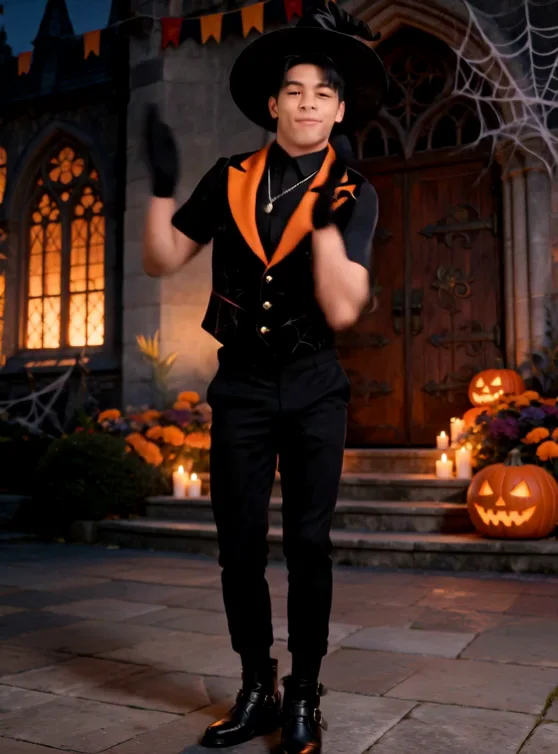
Seedance 2.5 · 480p adaptive · about 11 seconds · original audio
Try Halloween dance with Every Gen AIA Spooky Scary Skeletons AI-style dance needs more than pumpkins in the background. Crossing steps, small knee pulses, sweeping arms and a late forward dip make the routine readable. A pointed hat and orange lapels connect the performer to the Halloween set without requiring a complicated costume transformation.
We made two reference-led demonstrations for Every Gen AI: one with a fictional adult Asian man and one with a ginger cat as an upright character. This article shows what changed, what the motion reference contributed and how to plan your own AI video in EveryGen AI without treating a text prompt as an exact choreography guarantee.
Two subjects, one Halloween dance direction
The human version keeps a realistic adult performer in a black-and-orange outfit. The cat version is deliberately anthropomorphic: it has a cat’s face, fur and tail, but performs upright in the same style of costume. It is not a claim that a normal four-legged cat will reproduce human footwork.
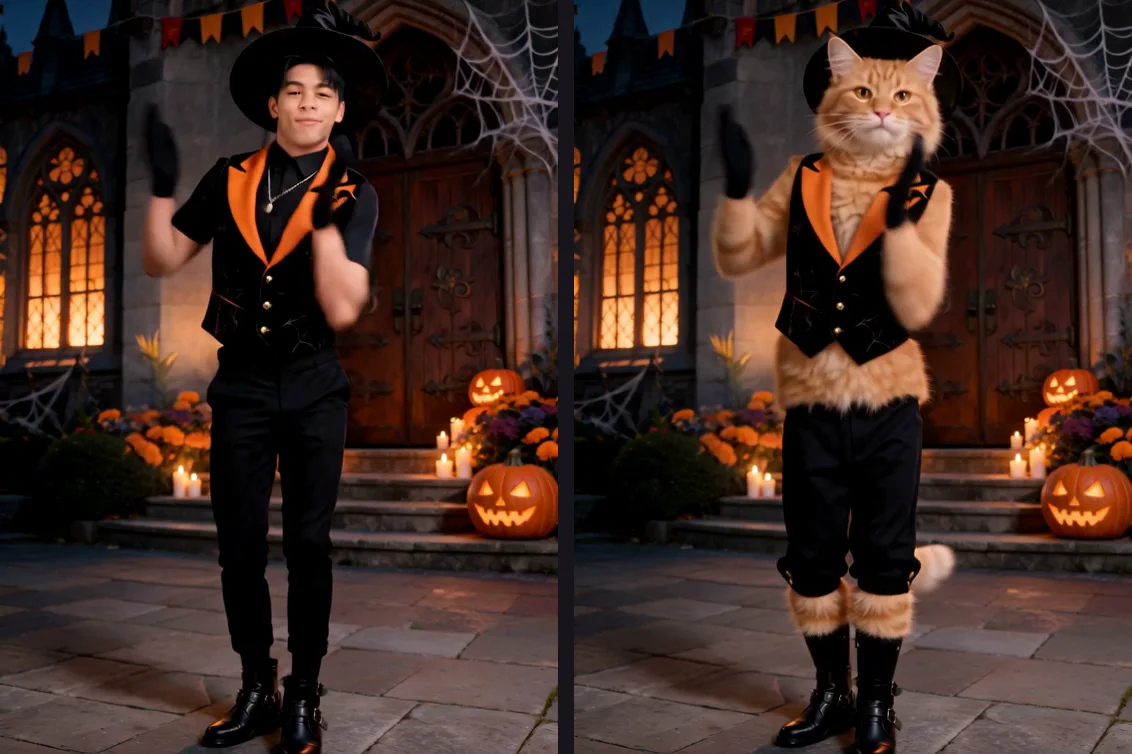
Both requests used Seedance 2.5 reference editing at the 480p adaptive tier. The returned files are 10.72 seconds, 558 × 754, with audio. Native adaptive dimensions can differ from a fixed 480-pixel short edge; we preserve and report the actual output rather than upscaling it.
Describe the dance in timed beats
| Reference time | Movement direction |
|---|---|
| 0–1.9 seconds | Lateral weight shifts and small crossing steps, arms moving between chest and sides. |
| 1.9–3.4 seconds | Arms open outward with knee pulses while mainly facing the camera. |
| 3.4–5.8 seconds | Crossing footwork, then a forearm or hat-brim gesture and torso lean. |
| 5.8–8.7 seconds | Wider stance, lateral leans and sweeping arms with the original torso turns. |
| 8.7–10.9 seconds | Cross-step, draw the arms inward, then dip forward and begin rising. |
The source is approximately 10.9 seconds. Asking for an unrelated 15-second dance would leave the extra time undefined and could change the ending. In the recorded edits, the model followed the reference’s length and framing; the time ranges clarified the sequence instead of replacing the video.
Check a human dance from hands to feet
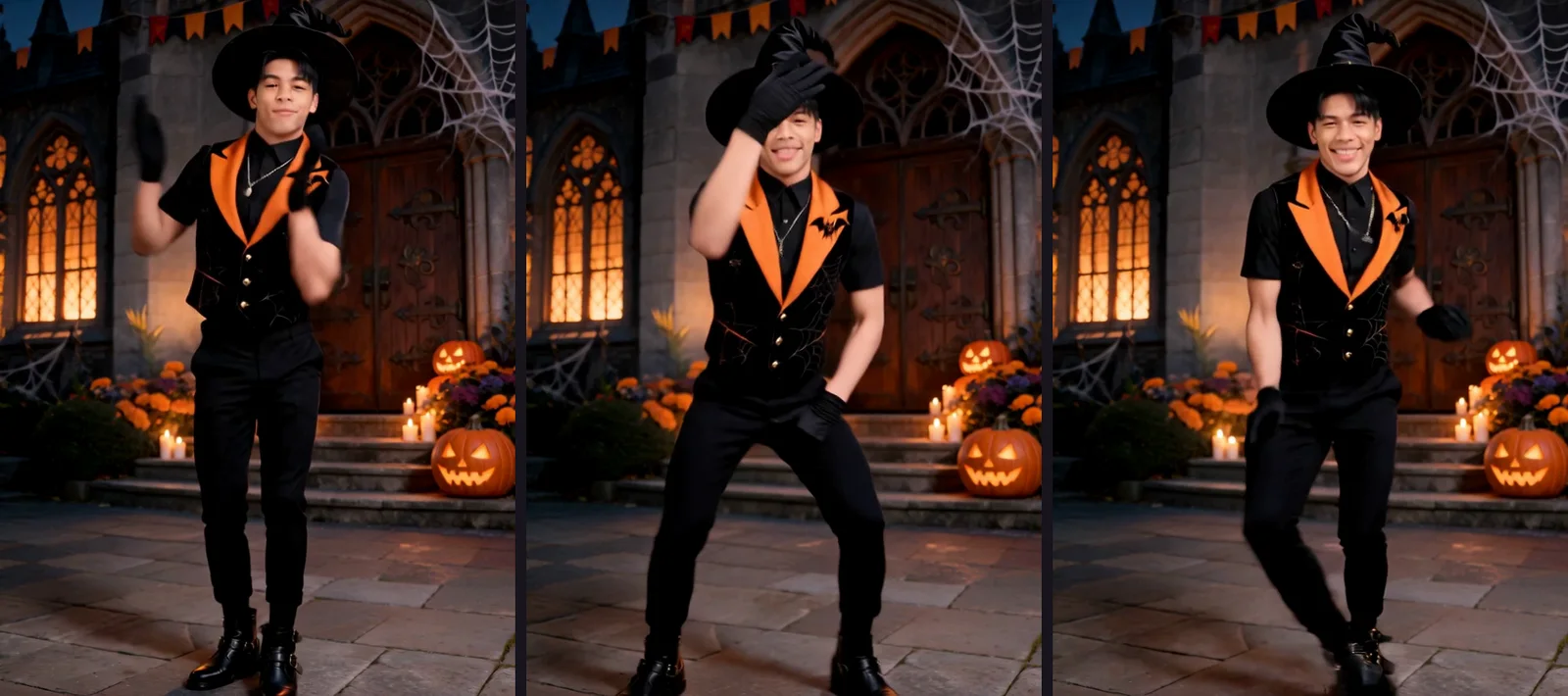
For a human subject, keep the same face, hair and body proportions throughout the shot. A full-body composition needs space around the hands and shoes; a close portrait alone does not tell the model how the complete costume and lower body should look. Use authorized photos and avoid identifying a real person you do not have permission to depict.
Make the cat’s body plan explicit
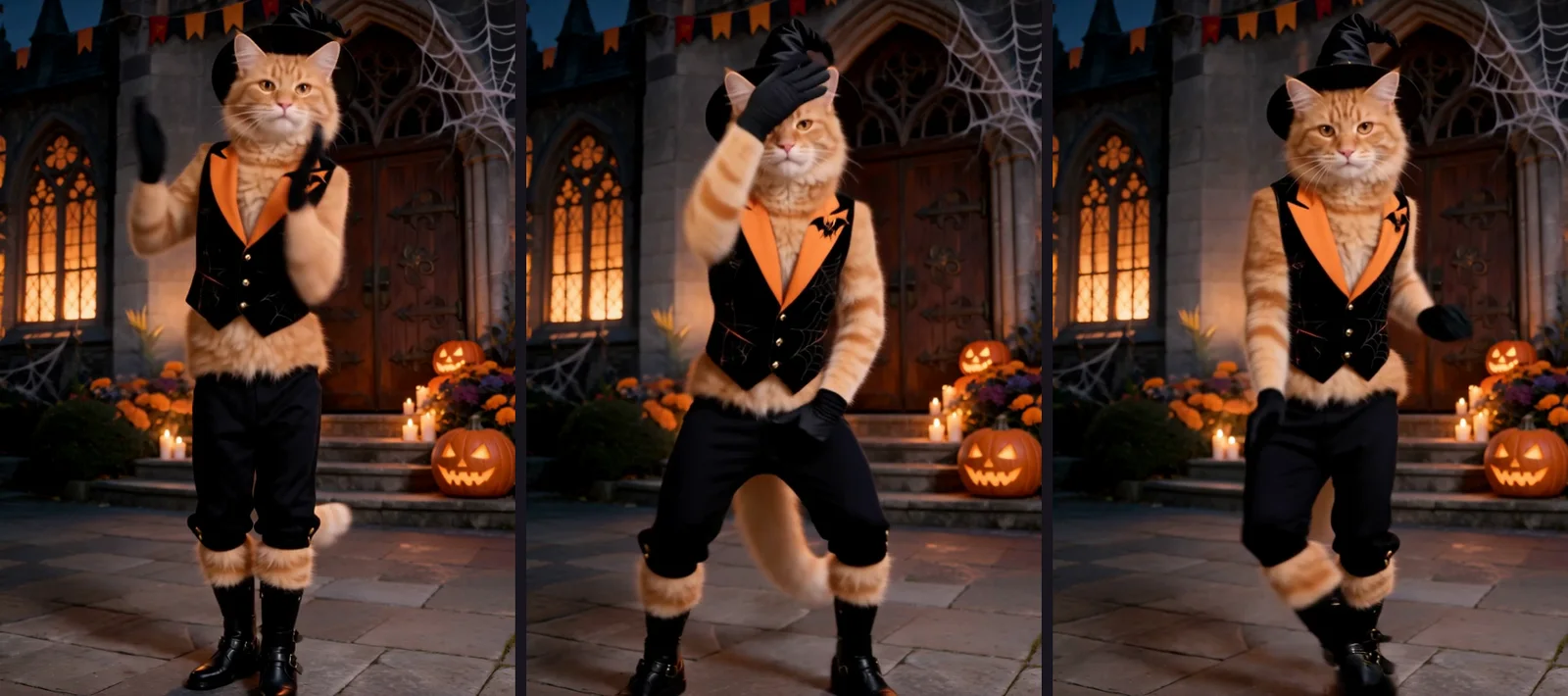
A cat prompt must settle a basic question: should the animal remain on four paws or become an upright dance character? Our demonstration chooses the second. It keeps a recognizable ginger-cat face, fur and tail while using a human-style stance. Specify that choice early; mixing both body plans in the same request can produce inconsistent limbs and clothing.
How to prepare your Halloween video in Every Gen AI
- Choose the subject and body plan first: a fictional adult performer, or an upright cat character.
- For a new scene from a photo, open image to video, add an authorized subject image and write a short dance direction. A photo supplies appearance, not exact motion.
- For a new scene from words, use text to video and describe the costume, full-body framing, set and movement beats.
- If you need the same choreography, use a supported reference workflow and footage you are authorized to upload. The exact recorded edit prompt below requires a video reference; pasting it into a photo-only request does not supply one.
- Check the selected model’s available settings and the full credit quote before generating. Review the saved task and download the result within 24 hours.
These two reference-edit demonstrations document a completed production method. This article does not claim that its human or cat image automatically loads a ready-made Halloween motion template into the generic tools. Keep appearance, reference movement and the chosen tool’s supported inputs explicit.
The recorded human reference-edit prompt
Edit @视频1. Replace only the performer identity with ONE fictional handsome adult Asian man with a consistent realistic face, short neat black hair and an athletic build. Keep the source Halloween costume, pointed hat, orange lapels, gloves and boots, Gothic entrance, pumpkins, cobwebs, candles and lighting. Preserve its 10.9s duration and portrait framing with a locked-off full-body camera. The replacement defines identity only; retain the original Halloween costume and props. The approximate time anchors below describe the source; retain its actual choreography and timing. [0.0-1.9s] Lateral weight shifts and small crossing steps with bent-arm sweeps between chest and sides. [1.9-3.4s] Open and sweep the arms outward with rhythmic knee pulses, mainly facing the camera. [3.4-4.9s] Continue crossing footwork, drawing hands toward chest or waist. [4.9-5.8s] Preserve the distinctive forearm gesture across the forehead/hat brim and torso lean. [5.8-8.7s] Wider stance, alternating lateral leans, knee pulses and sweeping arms with the original torso turns. [8.7-10.0s] Cross-step, bring the arms inward and lower the center of gravity. [10.0-10.9s] Perform the late forward dip and begin rising, finishing at the actual source pose. Keep one consistent face/body, the original foot contacts and all camera framing. No invented full spin, jumping routine, zoom, new scene or added triumphant final pose. Preserve source attribution. Generate original footsteps and eerie ambience, without copied music or voice.
The @视频1 (Video 1) token above means an actual attached source video, not a magic word. This is our submitted edit prompt, displayed with the reference role made explicit. The cat request used the same movement anchors but changed the identity instructions to an upright ginger-cat character. The original source footage is not distributed as an upload or download in this guide.
Finish with sound, identity and export checks
- Watch the last second as carefully as the opening: the dip and recovery should belong to the same routine.
- Check face or muzzle consistency, hands or paws, boots and the tail.
- Inspect generated sound and use only music or recordings you are entitled to publish.
- Keep the native portrait framing when exporting for a vertical post.
- Download within the displayed 24-hour result window; extra takes require a new confirmed quote.
The demonstrations request generated footsteps and eerie ambience rather than a copied song or voice. The Spooky Scary Skeletons search phrase is a theme reference, not an instruction to reproduce an existing recording. For purchase options and the distinction between passes and shared credits, see EveryGen AI pricing.
Questions about Halloween dance
Are these actual generated videos or only illustrations?
The article’s frames come from two completed Seedance 2.5 videos: an adult performer and a ginger-cat variation. Their native outputs are 10.72 seconds, 558 × 754, with audio.
Does the cat stay on four paws?
No. This demonstration is an anthropomorphic upright dancer. A natural four-legged cat would need a different motion brief.
Can an uploaded photo copy the dance exactly?
A photo guides appearance. Exact choreography needs a supported motion-reference workflow and the actual reference attachment; even then timing, anatomy and details can vary.
Does the prompt include the original Spooky Scary Skeletons song?
No. The recorded requests ask for original footsteps and eerie ambience, without copied music or voice. Obtain the appropriate rights for any music you add yourself.
Try Halloween dance with Every Gen AI
Bring your idea and the reference photos for your chosen tool. Choose your settings, check the quote and create a clip you can review.